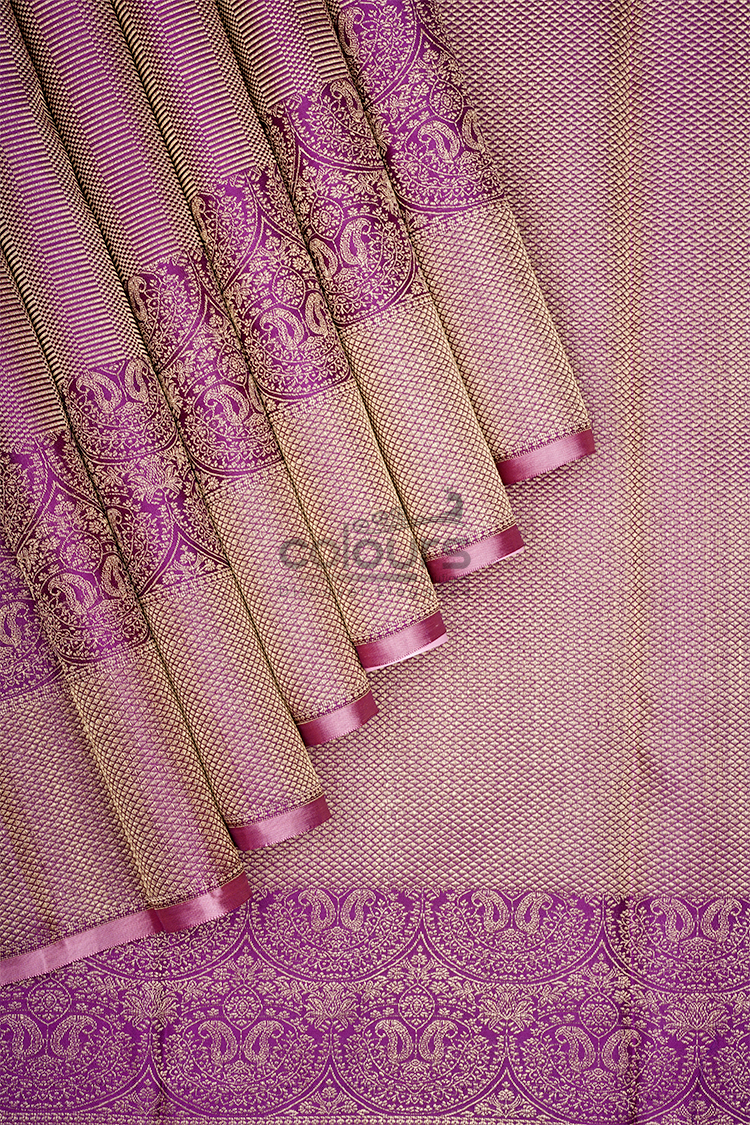
If a saree has very fine checks, test it with the camera you expect to use before a festive portrait session. The aim is to see how the pattern appears at different distances, rather than assuming every photograph will reproduce it exactly.
The CB001 – 207017-BL Colours Arani Kanchipuram Silk Saree is described as royal purple with antique-gold micro-check weaving. A self-purple-and-gold border adds paisley and floral details. The small repeated pattern makes a simple photo trial particularly useful.
Understand what the test is for
You are not testing whether the saree is good or bad. You are checking how a fine repeated pattern appears through a particular camera, lighting setup and final image size.
Fine patterns can sometimes show unexpected lines or interference effects in digital images. That possibility is not a confirmed issue with this product, and it does not establish a fabric defect.
Take a straightforward photograph before the event and inspect the result at the size you expect to share. A full-resolution image and a small messaging-app preview may look different.
The useful outcome is a practical setup that represents the outfit clearly.
Begin with a whole-outfit photograph
Wear the intended blouse and arrange the saree normally. Take a full-length or three-quarter image in ordinary light.
Check whether the purple body reads clearly and whether the gold micro-checks appear as individual lines or as a more general texture. Either may be an accurate visual impression at that distance.
Do not judge the saree only by zooming far into a small part of the image. Most family photographs are viewed as complete compositions.
Then take a closer picture if you want to record the weave detail. The two images serve different purposes.
Change distance before changing the outfit
If the fine pattern looks unusual in one image, try a different camera distance or framing and compare the results. Ask the photographer to review the image rather than repeatedly taking the same shot.
A closer detail photograph and a wider portrait may each work differently. Choose the version that looks natural and keeps the person, not only the fabric, central to the picture.
Avoid making large styling changes before checking the simple photographic variables. You may not need a different blouse or a new drape.
If a professional photographer is involved, mention the fine checks in advance so they can assess the setup.
Use lighting that preserves the purple and gold relationship
Look for a setting where the body colour remains visible and the reflective details are not the only thing you see.
Harsh direct light may create a different effect from softer light. Compare the actual images instead of relying on a general rule that all gold detail needs stronger illumination.
Check the face and the saree together. A lighting choice that shows every woven line but leaves the person uncomfortable or poorly lit is not a useful portrait setup.
Do not add heavy filters to force a more dramatic purple. The goal is to represent the outfit, not create a different product colour.
Keep supporting patterns deliberate
A plain blouse can leave the micro-checks as the main repeated pattern. Another fine check or stripe near the body may make the image busier.
That does not prohibit pattern mixing. It means the photographic test should include the complete outfit, not just the saree alone.
The self-purple border offers a coordinated colour direction, while the antique-gold details can connect with restrained jewellery. Compare the accessory finish under the chosen light.
For broader colour considerations, use the saree colour guide. This article focuses specifically on capturing a fine woven pattern.
Plan both individual and group images
A group photograph may place you farther from the camera, changing how much detail is visible. The purple colour and gold border may be more important than the tiny checks in that context.
Do not expect a wide family image to show every motif. If the weave matters to you, take one separate detail photograph as well.
For a Deepavali gathering in Singapore or a Diwali celebration in India, choose a safe, comfortable photo location that suits the people involved. The actual light and camera matter more than the country label.
Keep the photo session brief enough that it does not take over the celebration.
Choose the saree for wearing as well as photographing
This royal-purple design may appeal if you enjoy a fine repeated pattern and a coordinated border. Do not buy it only for an imagined camera effect.
The listing specifies pure silk, but the photo trial does not establish garment weight, comfort or care requirements. Ask for those details separately where needed.
Compare other designs in the saree collection if you prefer a larger motif or a plain body. The right choice should suit your own style beyond one set of photographs.
Frequently asked questions
Will this saree definitely show moiré or camera interference?
No. No such product-specific test result is established here. The advice is to check fine patterns with your own camera setup.
Should I edit the checks out of photographs?
No. Avoid editing that misrepresents the design. Try different framing or lighting if an image looks unusual.
Must the blouse be plain?
No. A plain blouse is a useful baseline for the camera test, but you can compare other combinations.
Will every gold check show in a group photograph?
Not necessarily. At a distance, fine checks may read as texture. A separate detail image can show more.
Explore the fine-check design
View CB001 – 207017-BL and plan a simple portrait test that keeps its purple colour and woven detail natural.