For Golu visits, choose a saree outfit that feels considered without needing constant adjustment. Think about the homes you will visit, the journey between them and the belongings you will carry.
Golu is part of Navaratri celebrations in some communities, rather than a universal way of observing the festival. If you are visiting friends or relatives who display Golu, dress for the welcome, conversation and movement involved in those particular visits.
Plan for an evening of visits
One visit and several visits create different needs. Make a simple route with enough time for travel and conversation. Include the distance from parking or transport to each entrance and any stairs you expect to use.
A plan with no margin can make the evening feel rushed. Leave time to settle the outfit after travelling rather than arriving while trying to rearrange your belongings and pallu at once.
If you are accompanying children or helping an older relative, account for that responsibility. Choose pieces that allow you to respond naturally instead of protecting a fragile accessory through every greeting.
Choose a pastel-pink Small Border direction
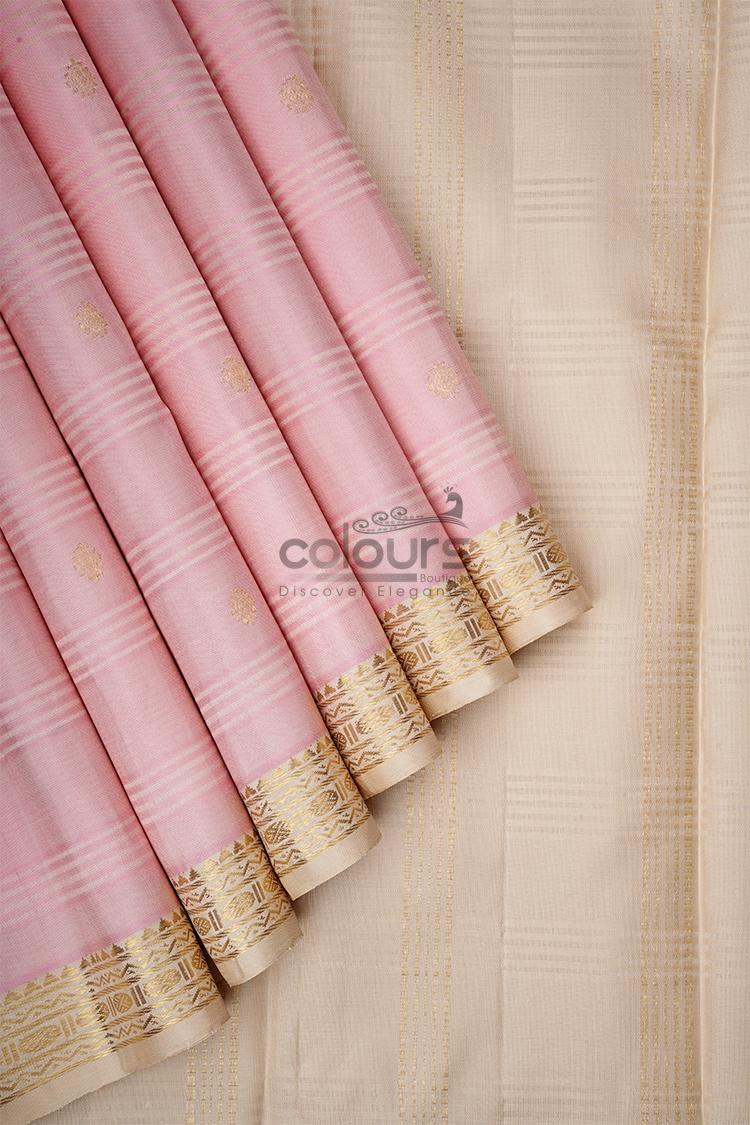
The CB001 - 201003-SB saree is listed in Small Border. Its description identifies a pastel-pink body, antique-gold butta, horizontal woven stripes and an ivory-and-gold zari border with floral and paisley details.
A compatible pink blouse can keep the body colour dominant; an ivory direction can echo the border. These are styling ideas rather than included blouse options. Compare physical fabrics if an exact match matters.
The category name does not establish a measured border width or garment weight. For several Golu visits, select according to your comfort and the activities ahead rather than assuming that “Small Border” automatically means lighter or easier to wear.
Consider the seating arrangements
Hosts may provide chairs, floor seating or a mix of both. Choose the option that works for your mobility and comfort; you need not force an unfamiliar sitting position to match the setting.
Before leaving, consider whether the complete outfit works when sitting for conversation. For detailed preparation, use our Navaratri draping guide. That guide covers pleats, pallu control and a movement trial in one place.
Keep the bag somewhere that does not pull at the drape when you stand. When getting up, gather your belongings first and give yourself space to move without catching loose fabric on furniture.
Make footwear removal straightforward
If footwear will be removed at several homes, choose a pair that is easy for you to take off and put on. Repeated fastening can become awkward when you are holding a bag or accompanying someone.
Think about the route outside the homes too. A pair that feels comfortable for a short photograph may not suit walking between stops. Balance the appearance with the distance you actually expect to cover.
Check that your chosen saree arrangement remains manageable when footwear is removed. Do not assume the length will behave identically in shoes and barefoot.
Carry fewer, more useful belongings
Choose a bag large enough for essentials but easy to manage beside the pallu. A secure closure helps keep small items together during travel.
If taking a gift, plan how to carry it separately so it does not crowd your hands during greetings. A bulky item can affect the practicality of an otherwise comfortable outfit.
A small adjustment kit can be useful. Keep suitable spare pins enclosed, alongside tissues and personal essentials. Avoid loose sharp items that can catch on fabric or be difficult to find in a crowded bag.
If you are choosing a saree gift
Selecting your own visiting outfit and choosing a gift are different decisions. The recipient’s colour preferences, blouse needs and preparation time deserve their own consideration.
Use the existing saree gifting guide for that purchase. Do not assume the recipient would choose the same saree or accessories as you.
Keep the evening adaptable
If the number of visits changes, keep the outfit and belongings practical enough to adjust the route. You do not need a different look for an unexpected additional invitation. Prioritise enough time to travel safely and enjoy the conversation at each home. A flexible plan supports the celebration better than a tightly packed schedule centred on outfit changes.
Planning Golu visits in India and Singapore
For an India itinerary, compare the actual distances between households and the transport available in your city or neighbourhood. For Singapore, include walking between transport stops and entrances if that is part of your route. Neither country has one universal visiting pattern. Ask hosts about timing and seating where needed, and allow for footwear changes. Golu is community-specific in both settings; organise the outfit around the visits you are actually making rather than treating it as every shopper’s Navaratri programme.
Frequently asked questions
Do I need a heavily decorated saree for a Golu visit?
No. A coordinated outfit can feel festive without heavy additional decoration.
Can I repeat the outfit at several homes?
Yes. Repeating a saree is practical and does not require an accessory change at every stop.
What if floor seating is uncomfortable?
Choose suitable seating and communicate your needs. Your comfort and mobility matter.
Should I bring a large handbag?
Bring the size you need, but avoid unnecessary belongings that make greetings and travel harder.
Choose your visiting saree
Explore the pastel-pink Small Border saree and use the main guide to compare the catalogue’s wider range.