Plan a Navaratri temple-visit saree around the particular temple’s guidance and the practical details of the visit. Clothing expectations, queues, footwear arrangements and access routes can vary.
There is no single outfit rule that applies everywhere in India and Singapore. Start with the venue, then choose a saree and supporting pieces you can manage confidently.
Check the temple’s own visitor guidance
Look for official information or contact the venue if a requirement is unclear. Check clothing expectations and any relevant entry arrangements before leaving.
Do not assume advice for one temple applies to another. A recommendation from someone else’s recent visit may help, but the current venue guidance remains the better starting point.
If your group includes visitors with different mobility or comfort needs, consider those needs together. An outfit plan should work alongside the route you will actually use.
Account for queues, steps and access
The visit can include more than the main activity. Consider the journey from transport, time spent standing and any steps along the route.
If you need accessibility arrangements, confirm them in advance rather than relying on general assumptions about the venue. Ask about the entrance or route relevant to your visit.
Think about your companions as well. Helping a child or relative can involve reaching, turning and carrying belongings. Choose an outfit that permits those responsibilities.
For the physical outfit trial, use the draping guide; it keeps the detailed movement checks in one place.
Style a dark-brown Varisai Pattu example
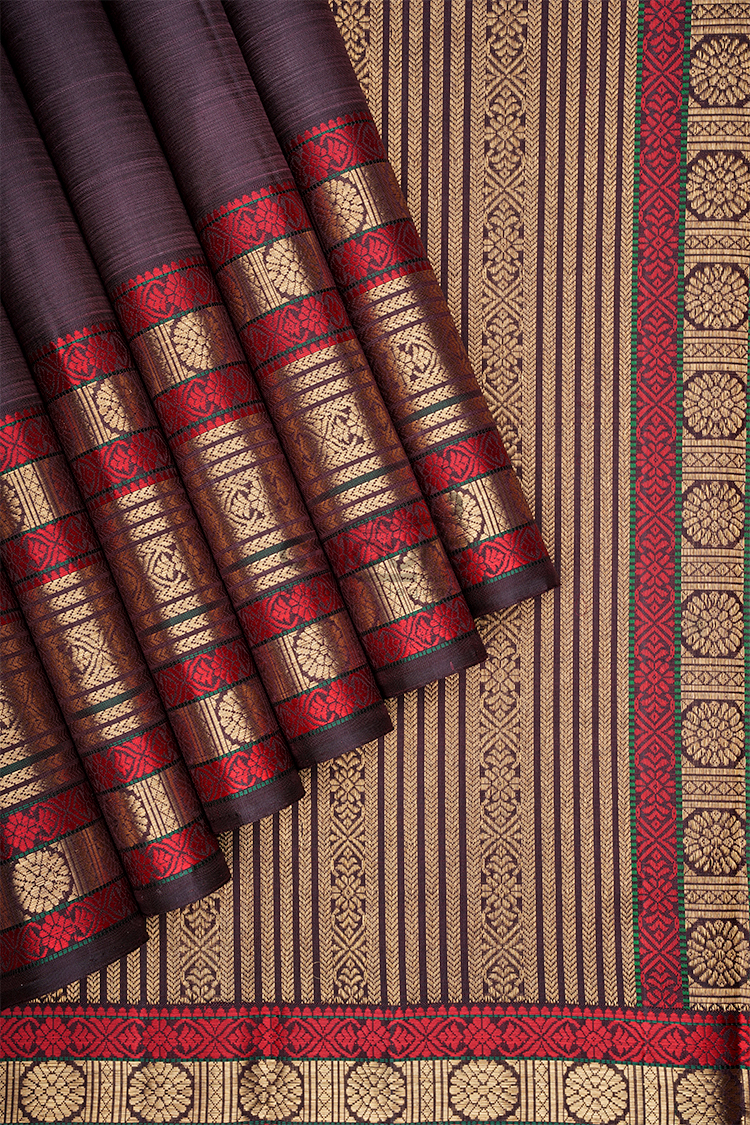
The CB001 - 2017005-VP saree is listed in Varisai Pattu. Its description identifies a dark-brown plain body and a red, black and antique-gold woven border with floral medallions and geometric patterns.
A compatible brown blouse can keep the body colour dominant. A red direction can repeat the border accent if you prefer stronger contrast. Keep the remaining pieces restrained if you want the border to lead.
For temple visits in India or Singapore, neither this category nor the colour replaces venue-specific guidance. Check the actual route and your own comfort; exact weight and tested movement are not established.
Plan footwear removal before arriving
Check where footwear is removed and how it will be managed. Choose a pair you can take off and put on without unnecessary difficulty.
Consider the walk outside the temple as well as the barefoot portion. Footwear that suits one part may be inconvenient for another, so plan for the whole route.
Test the saree length in both situations before leaving. Avoid an arrangement that becomes difficult to manage once shoes are removed.
Allow time for these transitions, especially when accompanying someone who needs assistance. Rushing at the entrance can make a simple change awkward.
Keep loose fabric clear of lamps
Pay attention to the pallu and sleeves near lamps or open flames. Keep loose fabric controlled and do not lean across a flame.
Follow the venue’s instructions about where visitors may stand or move. A desired photograph should not lead you into an unsuitable position or interfere with others.
Use a bag that stays manageable beside the saree. Avoid carrying unnecessary items that leave you balancing belongings while adjusting fabric.
For accessory selection, consult the jewellery guide instead of adding pieces purely for the occasion.
Prepare for the gathering afterwards
A temple visit followed by a family meal does not automatically require another saree. Plan one version that works through the visit and make a small change at the next venue if you wish.
You might adjust the pallu or change an accessory once seated at the gathering. Keep the change simple enough to manage without disrupting the group’s plans.
For three deliberate outfit variations, see the repeat-wear guide. Let the second venue’s activities guide your choice rather than assuming the outfit needs heavier decoration.
Keep plans clear within your group
Agree a meeting point and the likely sequence of the visit with your companions. This can reduce the need to handle phones and belongings repeatedly while moving through the venue. If part of the group will attend a gathering afterwards, decide how that transition will work before arriving. Clear arrangements give you more attention for the visit itself.
Check temple arrangements in India and Singapore
For an India visit, use the particular temple’s current visitor guidance and confirm the route if your group needs assistance. For Singapore, check the chosen temple’s own arrangements rather than transferring instructions from another venue or country. Clothing guidance, entry routines and footwear management may differ between temples in either place. The dark-brown saree is a styling example, not a rule for worship. Keep the practical visit and the comfort of your companions ahead of any desired photograph.
Frequently asked questions
Is a saree compulsory for every temple?
No universal rule is established here. Check the specific venue’s guidance.
Which colour should I wear?
Follow any venue-specific requirements and your own preferences. Dark brown is an example, not a prescribed religious colour.
What if I need an accessible entrance?
Confirm the relevant arrangements with the venue before travelling.
Can I keep the same outfit for a meal afterwards?
Yes, if it works for both settings. A small styling adjustment may be enough.
Choose for the actual visit
View the dark-brown Varisai Pattu saree and use the main guide to match the selection to the venue.