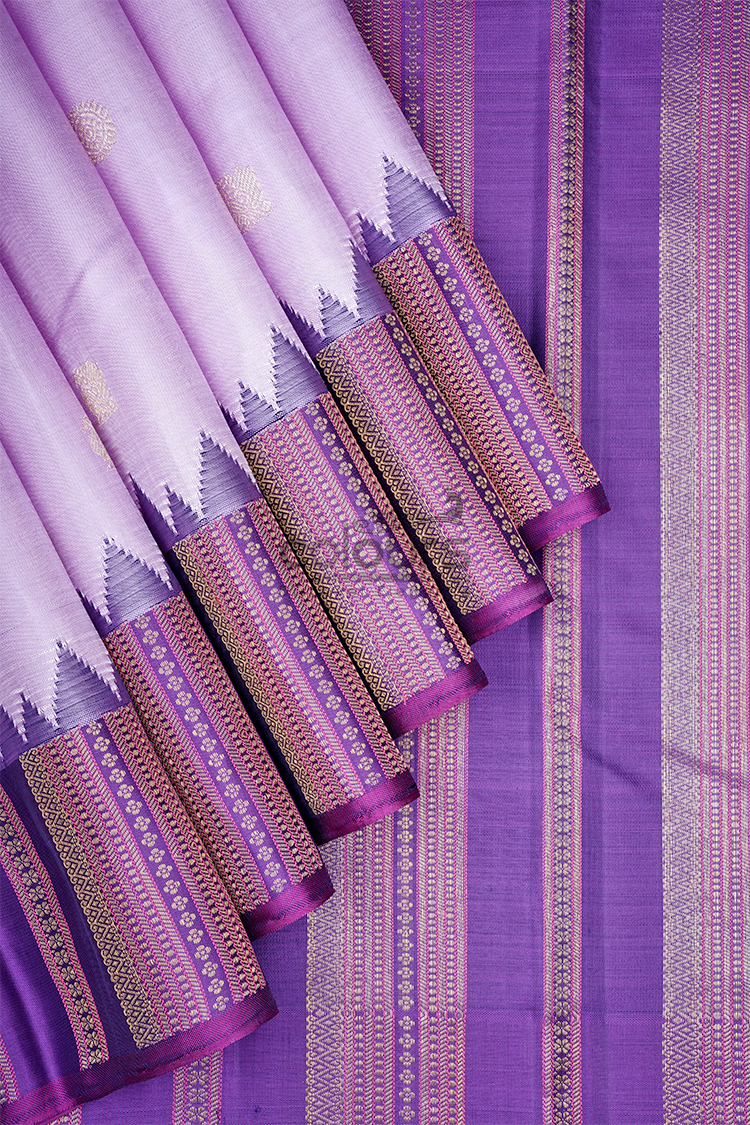
Rewear a Navaratri saree by changing the outfit’s focal point. A different blouse, jewellery choice or pallu arrangement can create a distinct look without replacing the saree.
This three-look exercise starts with pieces you already own. Match each version to the occasion rather than buying three complete accessory sets to justify one purchase.
Choose lavender with a royal-purple pallu
The CB001 - 207026-KO saree is listed in Korvai / Pethni / Benth. Its description identifies a lavender body with antique-gold circular and floral butta, plus a royal-purple zari pallu with temple-inspired, floral and geometric patterns and gopuram detailing at the transition.
For shoppers in India and Singapore, lavender and purple provide two wardrobe anchors for restyling. Compare a comfortable purple blouse and a compatible lavender blouse you own before buying new accessories. Confirm any included blouse fabric separately.
Look one: purple-led visiting
Try a royal-purple blouse to repeat the pallu colour. Compare the actual shades so the contrast feels deliberate.
Keep the pallu controlled while showing enough of its purple area to connect with the blouse. Earrings and a simple bag can support that relationship without adding another dominant hue.
This version makes the pallu colour part of the main palette. Use the colour guide for the comparison method and the Golu visits guide for route and seating preparation.
Look two: lavender-led hosting
A compatible lavender blouse can continue the body colour. The purple pallu then becomes the main contrast, with the butta motifs supplying smaller decorative details.
Choose an arrangement that supports greeting and serving. A blouse you already know fits can be more useful than a new design that needs another trial.
One version emphasises purple contrast; the other lavender continuity. Use the hosting guide to prepare the setting and responsibilities.
Look three: jewellery-led gathering
For a family gathering, choose one jewellery statement. A necklace can lead if it sits clearly with the neckline; statement earrings are another option.
If your activities allow it and you are comfortable managing it, an open pallu may display the saree differently. Test the arrangement before the event.
Keep the remaining pieces controlled. A change of necklace and pallu can be enough; adding every decorative item may hide the details you wanted to show.
With this lavender saree, compare whether the jewellery supports the butta and detailed purple pallu. An open arrangement may show the pallu patterns differently, but choose a drape you can manage comfortably.
Use the jewellery guide to evaluate scale and finish without repeating the full accessory checklist here.
Photograph and compare the three versions
Lay out each complete combination and take a simple reference photograph. Label the images visiting, hosting and gathering.
Identify the focal point in each. If all three use identical pieces and the same arrangement, the difference may be too small to help when getting ready. If each requires several purchases, simplify.
Two blouses and a carefully chosen accessory change may be enough. A useful repeat-wear wardrobe combines reliable pieces rather than creating three unrelated wardrobes.
Check comfort in each version. A blouse suitable for a short gathering may not be the one you prefer through a longer hosting evening.
Keep the plan ready for another occasion
Save the outfit photographs so you can recreate the combinations without repeatedly unfolding the saree. Note which shoes and blouse worked well.
Assess the garment’s condition before another wear and follow the existing care guide and product-specific instructions. Allow cleaning time where needed rather than treating the next outfit as automatically ready.
Record the useful details
Alongside each outfit photograph, note which accessory was comfortable and which piece you chose to leave out. These small observations can make the next occasion easier to prepare for. Keep the record factual to your own experience rather than assuming a combination will suit everyone.
Make the pallu display part of the change
For visiting, connect the purple pallu visibly to the contrast blouse. For hosting, keep it controlled around your activities. For a seated gathering, try a more open display if that feels manageable. Do not force an arrangement purely to expose the gopuram or woven patterns; the outfit still needs to work for your movement.
Build a repeat-wear wardrobe in India and Singapore
In India, plan the three combinations around the family and community occasions you actually attend. In Singapore, use the same approach for home visits, cultural gatherings or other invitations in your calendar. Neither market requires a different saree at every event. If accessories or blouses will be sourced across borders, account for preparation time before the next wear. Save your own outfit photographs and note which version suits each activity so the lavender saree remains useful beyond one festival purchase.
Frequently asked questions
Can I repeat one saree during Navaratri?
Yes. Choose versions suited to the occasions and care for the garment appropriately.
Do I need three blouses?
No. Two blouses and an accessory or pallu change may provide enough variation.
How do I make the versions distinct?
Change the focal point: blouse contrast, body colour or jewellery.
Must I buy new accessories?
No. Start with comfortable pieces you already own.
Choose a saree for several occasions
Explore the lavender and royal-purple Korvai-category design and use the main guide to plan several wardrobe connections.